Nickolas Asset Management’s Ambitious Plan for Autonomous US Molding Network
Scaling an existing factory
Nickolas Reinhart has spent the past several years buying factories, installing injection molding machines andbuilding a collection of plastics businesses across the United States.
Now the scale of what he’s trying to build as part of Nickolas Asset Management is coming into focus.
Reinhart wants 40 to 50 highly automated injection molding factories across the country, using artificial intelligence,machine vision and robotics to manufacture products close to their North American markets.
His businesses already operate 21 manufacturing and distribution sites, he said, and he plans to add another 24 to 36within five years.
“We’re booked at $750 million of revenue right now, going to a billion dollars,” Reinhart said in an interview. “Next yearwill be close to a billion.”
Behind that growth is a broader platform called Sequent, bringing together product development, material science,acquisitions, manufacturing, marketing and distribution around what Reinhart calls the “auto factory.”
“Our goal at Sequent is to reindustrialize America through autonomous production and automation,” he said.
For now, the factories are focused entirely on injection molding.
“I want 40, 50 [highly automated] factories across the country that can manufacture any consumer good for theNorth American market,” Reinhart said.
It’s an ambitious target. Reinhart says the company is opening roughly one factory a year now. He wants to reach foura year.
“Honestly, we’re just beginning,” he said. “I see this as a slow phase in our growth.”
Tiffin takes shape
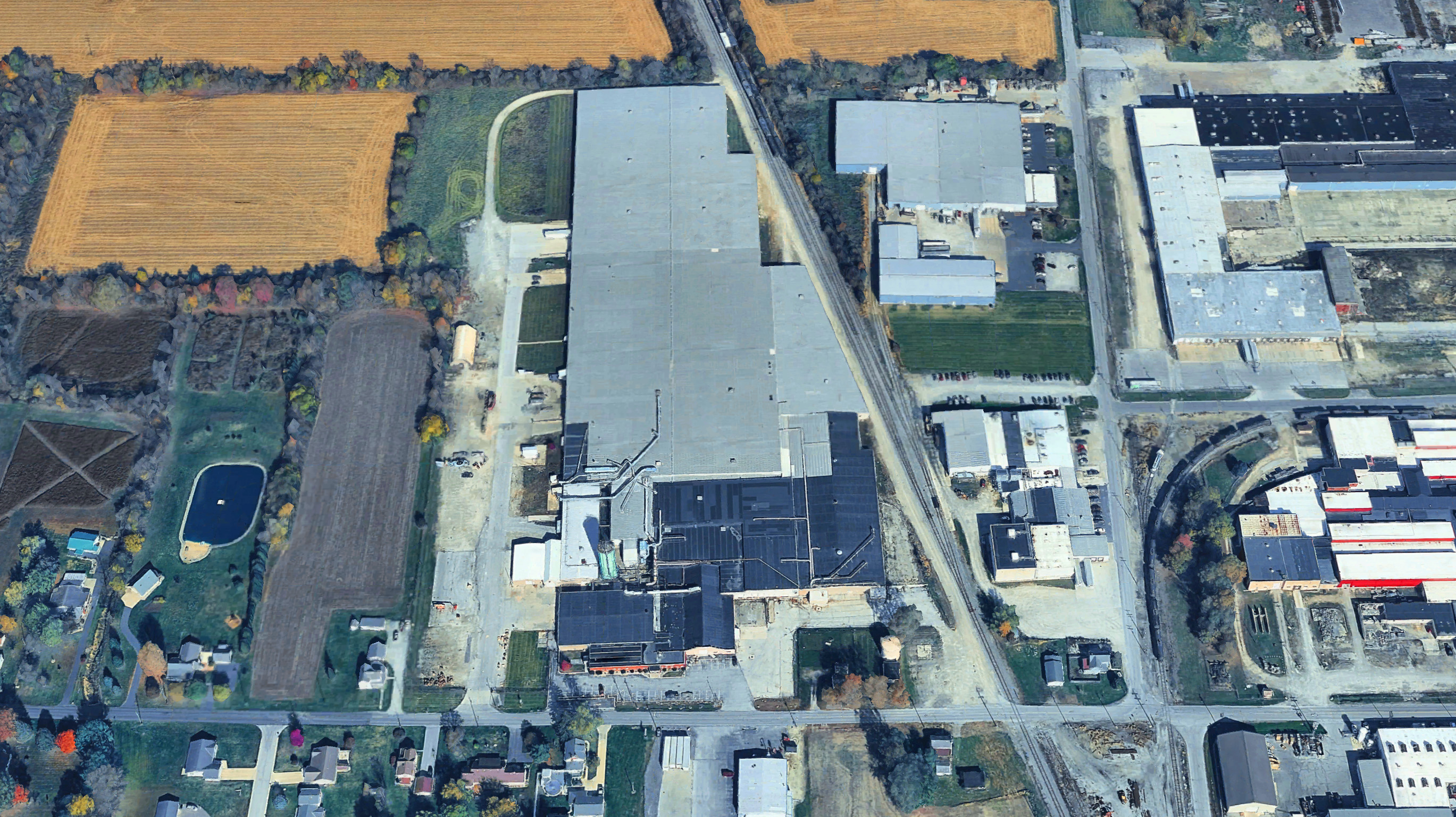
One of those auto factories is rapidly taking shape in Tiffin, Ohio.
Kreate Brands LLC is investing $100 million in a 542,000-square-foot building there, with plans to install 32 newEngel injection molding machines.
Eight machines are already in place, Reinhart said, and he expects all 32 production cells to be running by January orFebruary.
His goal is to take the formerly vacant building from no production to a $150 million annual revenue run rate in lessthan six months.
“We closed the deal in August,” Reinhart said. “So from August to January, we’re deploying 32 autonomousproduction cells and taking that facility from zero to $150 million of run-rated revenue.
“Think about that: August, September, October, November, December, January,” he said. “So in under six months, Imean, it’s honestly incredible. I never thought that we’d be able to be that fast at launching that facility.”
Tiffin is also an example of a broader real estate and acquisition strategy.
Rather than always building factories from the ground up, Reinhart looks for existing industrial properties with theexpensive infrastructure already in place: electrical capacity, water, cranes, silos and heavy concrete floors.
“There’s some amazing factories across the country that have been shut down, and jobs have been shipped out of thecountry,” he said. “But you have this infrastructure: the heavy power, heavy water, cranes, silos, heavy concrete.”
The idea is to put modern production systems into those older industrial shells.
“When we can find an underutilized industrial asset, we can deploy our production system and take that industrialasset and make it a completely automated new high-tech facility,” Reinhart said.
The Tiffin building eventually has room for 40 molding machines.
‘Humanless manufacturing’
The technology inside those factories is the centerpiece of Reinhart’s strategy.
“We truly are doing what I would call humanless manufacturing,” he said.
That doesn’t mean factories without employees. Reinhart said his businesses employ more than 150 skilledtradespeople, and he sees automation as a way to shift their work away from repetitive production tasks.
“We’re a trades-focused company that’s developing technology to be globally competitive,” he said.
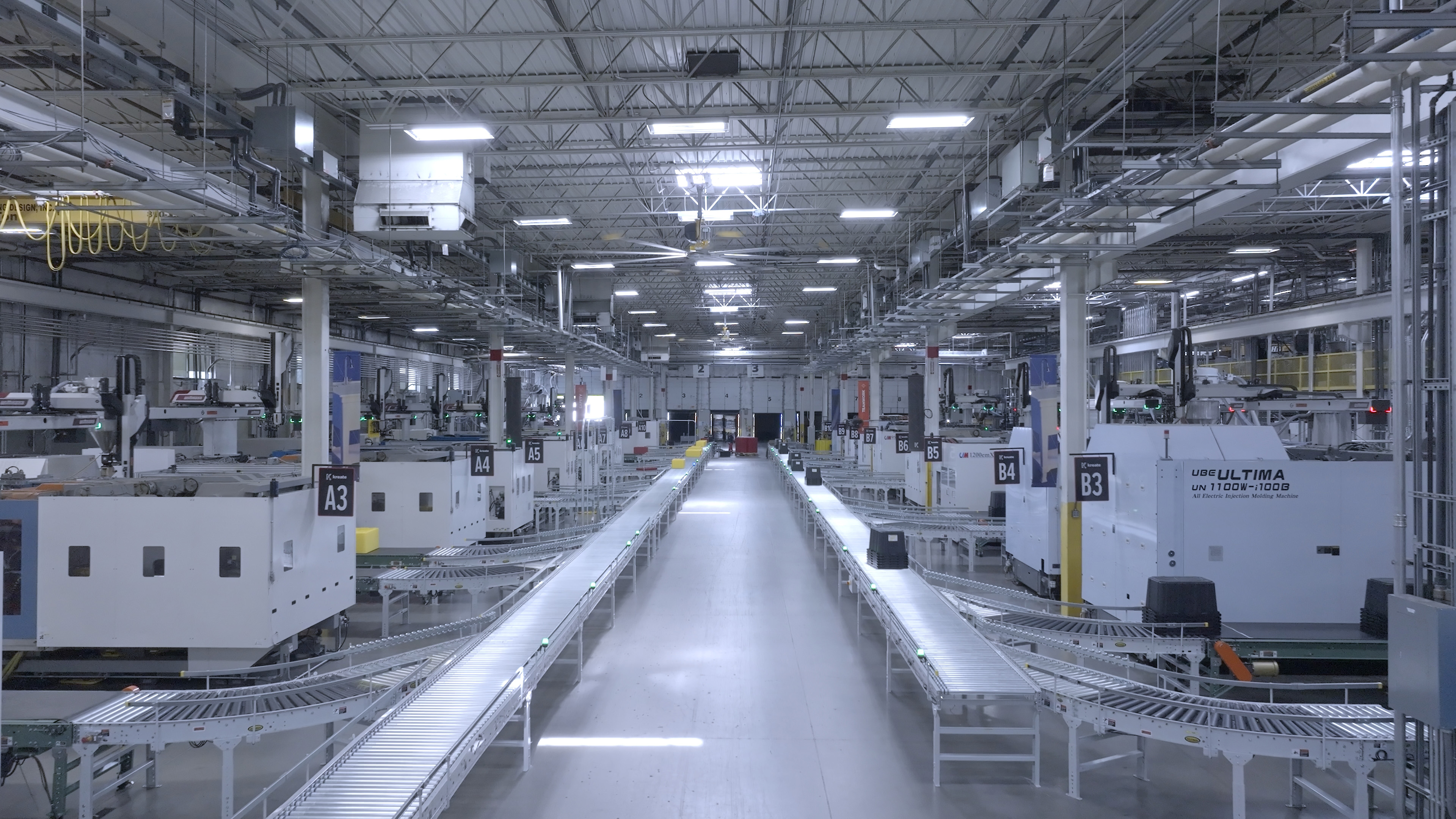
A typical autonomous cell can incorporate an injection molding machine, pick-and-place robot, automated conveyors,collaborative robot, packaging robot and automated guided vehicle.
The difficult part was getting all of that equipment to function as a single system.
“You have to have an injection molding machine, a pick-and-place robot, an automated conveyor system, acollaborative robot, another set of conveyors, a packaging robot and an AGV, and then you have to have the brainstied together to run all that,” Reinhart said.
“We had to develop the software to tie all that together, and that was probably the single biggest unlock.”
Reinhart said Sequent has more than 25 artificialintelligence, data and automation engineers working onthe technology, including engineers with doctoratesfrom MIT.
The company has been developing the system forabout seven years and has spent an estimated $25million to $50 million on R&D, testing and related work,he said.
The difference between conventional factoryautomation and what Reinhart is trying to accomplish,he said, is the ability of the production system torespond to problems on its own.
“Our AI actually changes the machine settings,” he said.“Our AI uses vision; it inspects the part, and if that part’sbad, it tells the machine what to fix. And there is nohuman interaction or intervention in fixing thatproblem.”
The machine corrects itself, he said, allowing the cells to run lights out.
And Reinhart said the system isn’t limited to long-running jobs. Cells can be configured for multiple products, withvision systems trained for each job and flexible automation allowing the cell to switch through program changes.
“It’s all about the design right up front,” he said.
Scaling an existing factory
Reinhart points to another Ohio operation as evidence of how quickly the model can scale production.
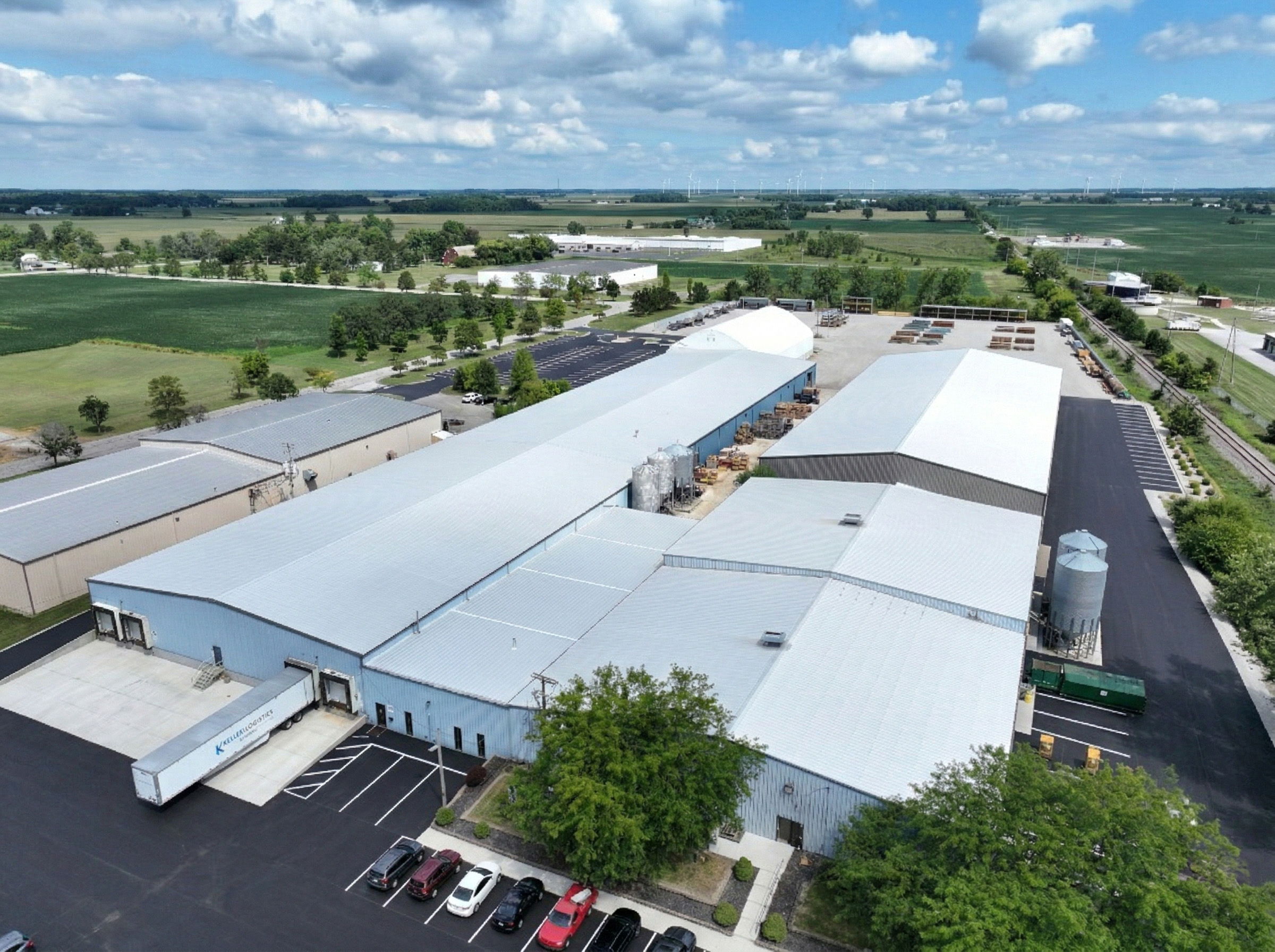
Kreate acquired Precision Thermoplastic Components Inc. in Lima in 2025, gaining a 115,000-square-foot factoryand the proprietary 50Strong water bottle brand.
Reinhart said the operation was generating about $6 million to $8 million in revenue when it was acquired.
Twelve months later, he said, revenue had reached $48 million from the same footprint.
“Again, that’s because we’re putting new autonomous production lines in place,” Reinhart said. “We can quickly scale.We kind of build the line, drop it in, start it up.”
That approach also helps explain what Reinhart is looking for as he continues making acquisitions.
Proprietary products are attractive. So are brands with substantial room to grow.
But sometimes the factory itself is part of the prize.
“I can walk into a factory that’s older and dated, kind of see the vision of what needs to happen to modernize it, deployour autonomous production cells and use that infrastructure to quickly grow revenue,” he said.
An operation called Configure serves as the acquisition and incubation arm for smaller businesses, Reinhart said.
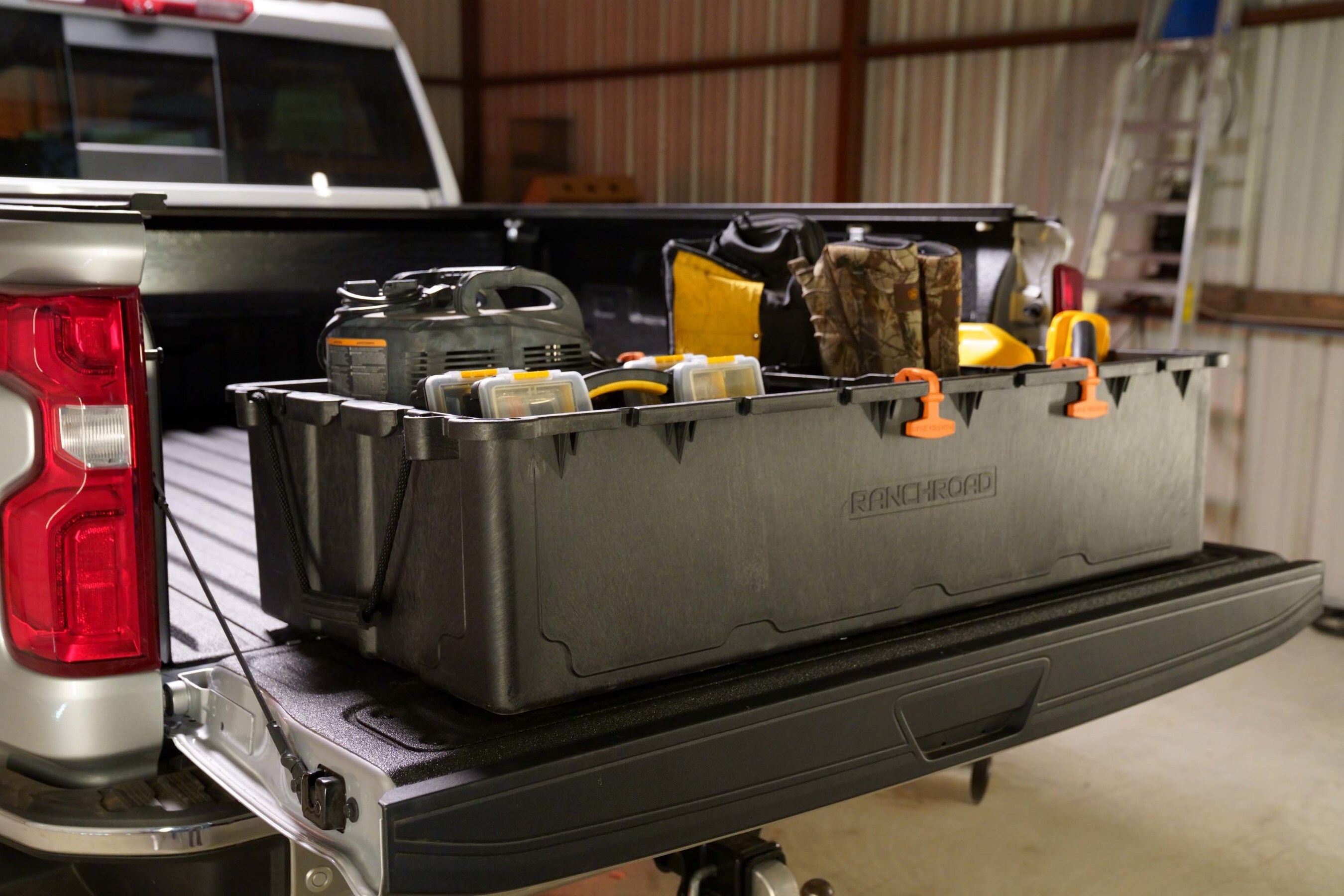
Among its acquisitions are Ranch Road Cargo, a Texas maker of vehicle storage products; PTC in Lima; and Ogo inNorth Baltimore, Ohio.
Reinhart said several other acquisitions are under letters of intent and could close within the next 90 days.
“We will buy smaller companies and build those companies up while we’re deploying the process,” he said.
More than a molding operation
The factories represent only part of the system Reinhart is assembling.
His businesses have three innovation centers, in Findlay, Ohio; Atlanta; and Sarasota, Fla., and own 36 large-format 3Dprinters.
A process called Faster is intended to move a product from an idea to a finished 3D product within 24 hours.
Reinhart also has a marketing operation called Energize that works with thousands of social media influencers togenerate demand for products, and he said the organization has material science capabilities to develop sustainableresins for its products.
“We’re complete end to end,” Reinhart said. “We can go from product idea to a finished product in 24 hours, and that’sour product. That’s a product we developed, and we have a place in mind to sell that product.”
“So not only did we design it, develop it, we market it, we brand it,” he said. “We also own our own material sciencecompany, where we develop our own sustainable resins for those products in advance of or during the ideationprocess.”
Kreate’s proprietary products include storage containers, shelving and cabinets, agricultural products, buildingproducts, pickup truck cargo systems, utility sinks, garden beds, planters, toolboxes, organizers, gutter accessories,sawhorses and work supports.
One of its highest-profile product lines is the black-and-yellow storage containers sold at Home Depot.
“Again, we’re kind of product agnostic,” Reinhart said. “I can innovate, ideate, launch, create demand for, and distributepretty much anything.”
Mold making is the next piece
One important part of that end-to-end model still takes place largely outside Reinhart’s operations: mold making.
That could soon change.
Nickolas Asset Management LLC is the stalking-horse bidder and debtor-in-possession lender for American Tool &Mold Inc., a Clearwater, Fla., mold maker and injection molder operating under Chapter 11 bankruptcy protection.
The transaction remains subject to the bankruptcy sale process.
For Reinhart, American Tool would fill a specific hole in the manufacturing chain.
“Our plan for Clearwater is very simple,” he said. “We currently outsource mold building to Canada, to Portugal, toChina, and Clearwater will be a vertical for us, where we bring all of our tool and die manufacturing back to NorthAmerica, and that will fill the facility.”
American Tool is also about an hour from Reinhart’s Sarasota headquarters.
“I lead the engineering team, so for me to be able to drive an hour down the street and have my hands on the toolingand the product development, everything is important,” he said.
The economics have become increasingly significant.
Reinhart said his businesses have spent $8 million to $10 million on tariffs on imported tooling.
“That’s a cost that we don’t want to have,” he said.
“I don’t know if we’ll be able to bring all of our mold making back in-house right away. But this acquisition is a big stepin that direction.”
He has bigger plans for the operation if Nickolas ultimately acquires it.
Reinhart wants to apply the automation, vision and AI technology developed for injection molding to tool and dieproduction.
“It’s a massive step, because my goal is to actually take the same technology that we’ve applied to the injectionmolded business — the vision, the AI, the collaborative robots — and deploy that in tool and die making in the U.S.,” hesaid.
Selling the auto factory
Eventually, Sequent itself could become a product.
Reinhart said he envisions building autonomous factories for other manufacturers, operating them and evensupplying the workforce.
“If someone wants an autonomous factory, we can build that factory for them,” he said. “We can manage the factoryfor them. We can staff the factory for them, and we can localize production for them.”
An internal trades program trains technicians, and Reinhart said the same AI systems running production can helpemployees learn maintenance, tooling and processing jobs more quickly.
For his own network, Reinhart sees opportunities beyond consumer products in medical, aerospace, defense,automotive, commercial and industrial packaging and other injection molded markets.
“We’re product agnostic,” he said. “Our technology can kind of be deployed in any type of injection molded product.”
Reinhart’s embrace of AI and autonomous manufacturing comes from someone whose plastics career began withdecidedly less sophisticated technology.
His family owned Centrex Plastics, and Reinhart started working on a production floor when he was 18.
“My first job was on a production floor, manually pulling the part out of a press on a 1969 Natco,” said Reinhart, now44.
“I’ve watched the industry change from pulling the part out of the press to a pick-and-place robot to now AI vision,collaborative robots and AGVs running our factories. It’s pretty incredible.”
Reinhart said he has no private equity partners backing Nickolas Asset Management.
“I am actually just a guy who loves this industry,” he said. “I’ve grown up in it. I’ve did every job in it. I love it. I wake up at4:30 every morning, and I’m excited to go to work and work in the plastics industry.”
Despite his talk of “humanless manufacturing,” Reinhart comes back repeatedly to people.
He said technology can automate production, provide technicians with better information and even help train themfaster. But it still has to be deployed and maintained by people who understand manufacturing.
“Our people is the strength of this business,” Reinhart said. “It is the single most important thing.”
“With all the technology that’s being launched, guess what?” he said. “You still have to have the right people thatunderstand how to actually deploy the AI in the physical world and make it work.”